About Rhonda Mason
About Rhonda Mason
Biography
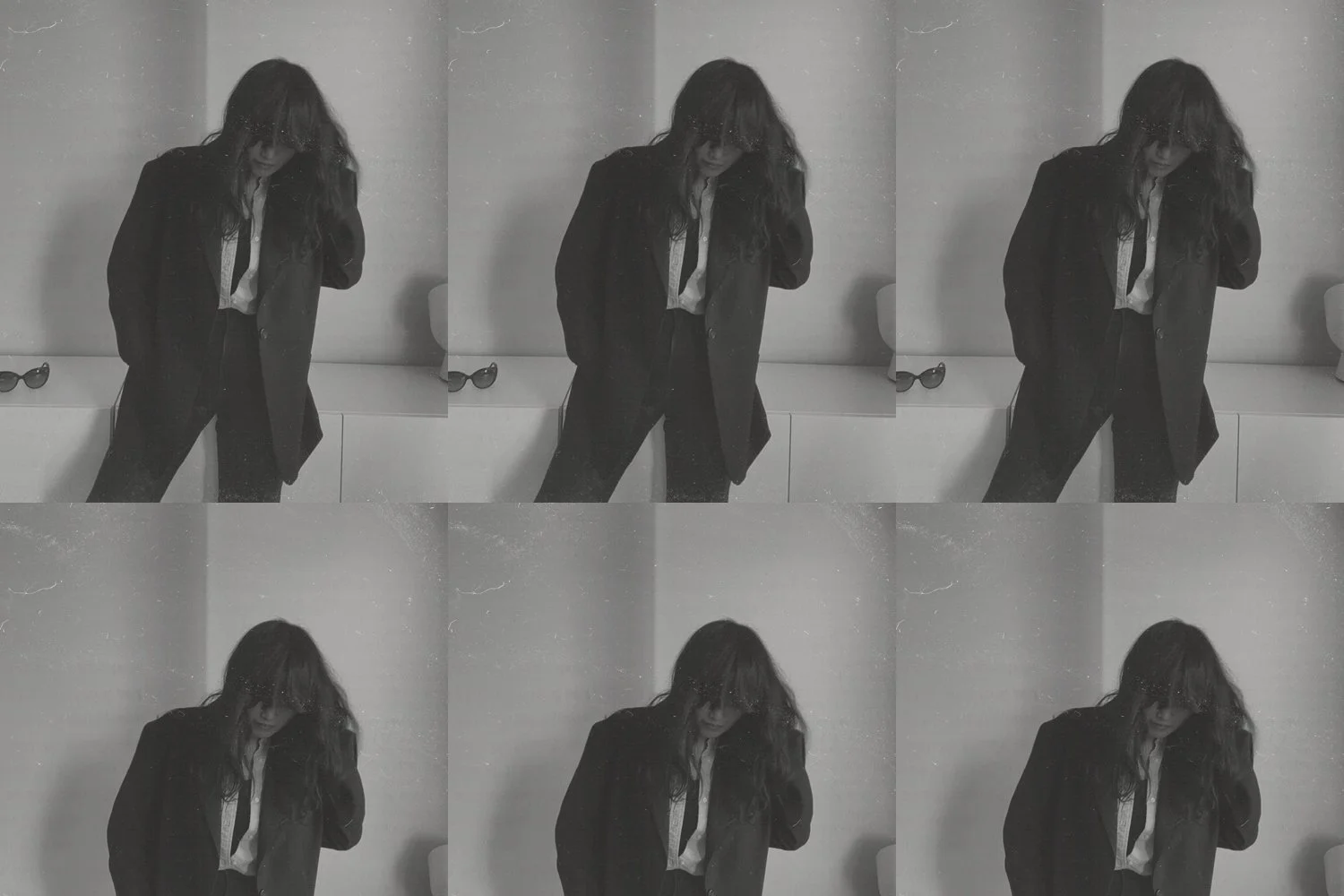
Rhonda Mason is an Australian writer, designer, and visual artist based in Sydney.
As a designer, Rhonda has twenty years of branding and graphic design experience, including many years working in B2B marketing as well as launching multiple consumer brands from the ground up. She currently freelances for a small number of commercial clients. In 2018, Rhonda began building her practice as a self-taught artist and, from 2022 to 2023, she attended Julian Ashton Art School in The Rocks on a part-time basis. Her past collections include Human Instinct and Duality of Negative Space. Rhonda is also the author of Life Without Cameron, which was published in September 2016 by Evening Press, and she has written and edited countless blogs over the last fifteen years.
Born in Hong Kong, Rhonda lives on the sacred land of the Dharug People with her husband and five of her six sons. Her first son, Cameron, died in utero at forty-one weeks in 2007, and her journey of grief is documented in Life Without Cameron.
Artist statement
With a background in graphic design that spans more than twenty years, Rhonda’s current body of work utilises lines and repetition to explore the imperfect beauty of being human, as well as the universal human experience of journeying from day to day, not knowing what the next day will bring. Rhonda takes influence from the minimalist movement and artists such as Agnes Martin, Sol LeWitt, Richard Serra, and Gertrud Goldschmidt. Rhonda enjoys working with eco-friendly mediums such as ink, oil stick, and natural acrylic, and she is committed to an art practice that is sustainable and environmentally responsible.
Environmental responsibility
Leaving a minimal footprint on the environment is a crucial aspect of Rhonda’s art practice and business model. Adopting a collection-based approach, our studio considers, from the outset, the potential environmental impact of each new body of work and how this can be minimised and managed through responsible choices and sustainable practices.
With Human Instinct, for example, Rhonda’s preferred medium was handmade gouache paint, comprising only natural ingredients that could be safely disposed of. The paper used was made by Khadi Papers India—a renowned business that makes paper using cotton from t-shirt offcuts and that only uses water from their own bore wells as well as rainwater capture. In terms of wastage, very little scrap paper resulted from Human Instinct, and all of it will be repurposed as gift tags or bookmarks over time.
For her current body of work, Rhonda has chosen to work with watercolour paper from Arches Paper, the first paper mill worldwide to receive the new SCS Global Services certification. Black ink is her chosen medium for this body of work, and, as the pens are used up, they are gathered and stored. Once the entire collection is complete, the pens will be recycled through our local Officeworks or through TerraCycle. Less than half a dozen sheets of paper have been scrapped in the studio for this body of work to date, and these have all been collected for repurposing.
With regards to our debut poster collection, the studio is collaborating with a trusted local vendor whom Rhonda has worked with for over fifteen years. The electrophotography ink contains no hazardous air pollutants, and the printed posters are fully recyclable via normal collection streams. The paper stock is FSC® Certified, made through a carbon-neutral process, and consists of 100% post consumer waste recycled fibre, and the mill itself uses 86% renewable energy. Furthermore, the current plan is to only print in small batches of 25 to minimise possible wastage.
Our studio also gives full consideration to how our artworks and posters are packaged. Both our artworks and our posters are protected with acid-free glassine paper, which is fully recyclable, and all original artworks are shipped in waterproof eco-mailers that are both compostable and fully biodegradable. Original artworks are also protected with acid-free backing boards, and these can be reused, repurposed, or recycled. Similarly, the rigid mailers we use for both artworks and posters are 100% recyclable, while the tissue paper that accompanies our original artworks can easily be reused.
Use of artificial intelligence
A key pillar of Rhonda’s writing, design, and art practice is the commitment and desire to preserve the human factor. As a general rule, the use of artificial intelligence (AI) is avoided in our studio. To date, the only exceptions to this have been: The use of ChatGPT to determine the name of plants, flowers, and trees in photos that Rhonda captures. The use of generative AI in the Lightroom Classic app to remove a man from the background of the photo taken at Ace Hotel Sydney for Man on the Moon. The use of Google’s AI Overview to determine the list of Asia-Pacific countries included in Australia Post’s ‘Zone 2’ category.
Acknowledgement of country
Our studio acknowledges the Dharug People as the traditional owners and custodians of the land upon which our studio resides. We pay respect to their Elders, both past and present, and we recognise their deep and continuing connection to this land and its waterways.
Copyright and permission
No part of this website may be reproduced in any form without express written permission from Rhonda Mason. This includes all text and all imagery that can be viewed on this website.